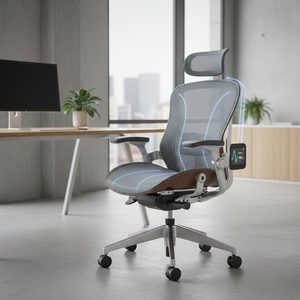
Sensors and adaptive mechanisms are helping chairs respond to how people actually sit and move throughout a long workday.
Smart seating is not about dashboards for their own sake. It is about closing the gap between laboratory ergonomics and real behaviour — fidgeting, perching, deep focus and everything in between.
1. Feedback without friction
Subtle cues and auto-tensioning springs adjust support as posture changes. Users should feel comfort, not notifications.
"Technology earns its place in a chair only when the person sitting there forgets it is there."
— Elena Rossi, Lead Ergonomic Researcher
2. Data that improves the next chair
Anonymised durability and usage patterns from pilot fleets feed our engineering team. That is how we thicken a pivot, reshape a seat pan or retune a gas lift before volume production.

3. Privacy by design
Occupancy and posture insights stay on-device or aggregated. Smart never means surveillance — it means quieter, healthier support.
The best smart chair still looks like beautiful furniture. The intelligence lives in the mechanism, not in the marketing.